Core Results
The main output of this project is a guideline (glide path) for investment strategy for retirement and non-retirement accounts.
Retirement
Glide Path
An optimal glide path for retirement involves near-100% allocation into stocks through age 30. As an investor approaches retirement, this allocation decreases, replaced primarily by bonds until arriving at the post-retirement allocation of 48% stocks/ 24% bonds/ 28% T-bills
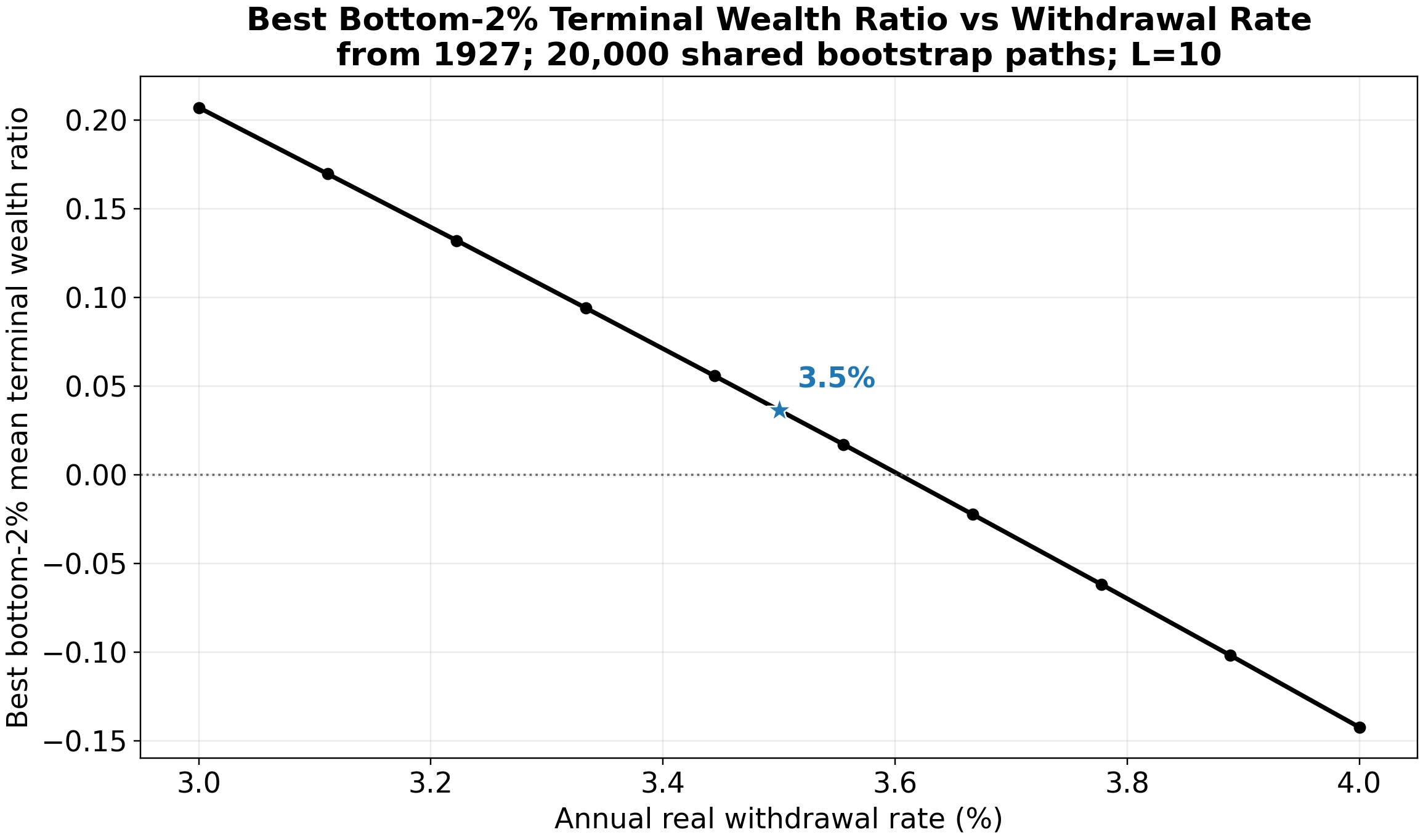
Annual Withdrawals
The project also tested whether the standard 4% advice for withdrawals in retirement was reasonable. Interestingly, under my assumptions, 4% was slightly too risky; around 3.5% seemed the most-aggressive safe rate. See Determining Annual Withdrawals for more detail.
Non-Retirement
An investor with just a year to invest should invest roughly 10% stocks/ 90% T-bills. Longer horizons gradually trade T-bills for intermediate-duration bonds, and gain more stock exposure. By 30 years, we’re somewhat close to the famous 60/40 at 60% stocks/ 32% bonds/ 8% T-bills. At a 50-year horizon, the optimal portfolio hits about 87% stocks/ 13% bonds.